You put your kitchen floor to the test more than any other surface in your home. It’s constantly subjected to abuse from stomping feet, splashes and spills, and dropped pots and pans. So, when you set out to find a flooring material that will exceed your expectations, porcelain kitchen floor tiles may be just the thing for your home’s kitchen flooring.
You can find porcelain tile with convincing marble veining, limestone chalkiness, or even the textured warmth of oak planks. It can achieve all this while being water-resistant, stain-resistant, and able to withstand everyday wear and tear. Designers find ways to incorporate it into any space, and homeowners gain superior peace of mind after it's installed.
In this guide, we want you to understand the key tile types, layout and finish tips, fresh trends to inspire your next remodel, and a maintenance routine that’s simple enough to stick with year after year. The goal is to help you choose porcelain kitchen floor tiles that enhance your space today and will still look amazing ten years from now.
Why Choose Porcelain Tiles for the Kitchen?
Every kitchen pushes flooring to its absolute limit. There’s high foot traffic, stabbing utensils, and splash zones near sinks and ranges. This makes a strong and low-porosity flooring material super important. Since porcelain is fired at exceptionally high temperatures, it achieves a density and durability that works beautifully in the toughest kitchen conditions.
Durability: Porcelain tile’s dense composition helps it stand up to chair legs, pet claws, and occasional accidents.
Water and stain resistance: Tile is low absorption, so spills sit on its surface rather than soaking in.
Low maintenance: You won’t have to wax or seal your tile itself, just sweep and mop with a mild cleaning agent (always check the manufacturer’s recommendations first).
Flexible designs: Satin-matte concrete, glam polished marble effects, you name it. You’ll find your ideal finish, no matter your kitchen’s style.
Long lifespan: When it’s properly installed and maintained, porcelain kitchen floor tiles can remain stable and color-true for decades. That alone can make the cost of ownership much more attractive.
Design Aesthetic Ideas for Kitchens
Porcelain kitchen floor tiles let you create any mood you want without the headache that comes with more natural materials.
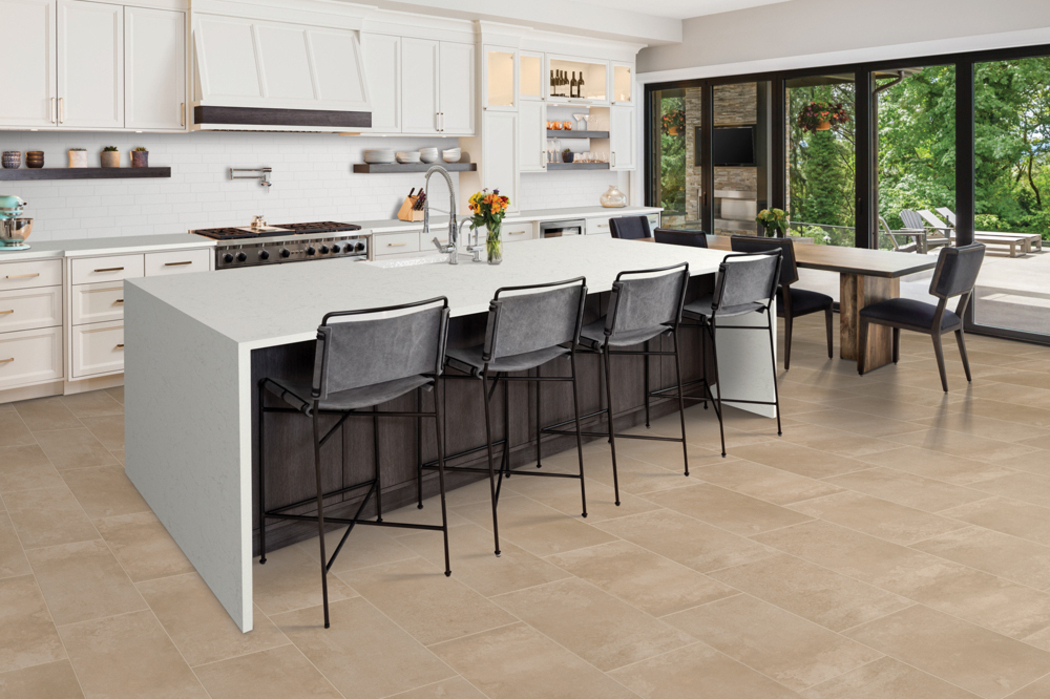
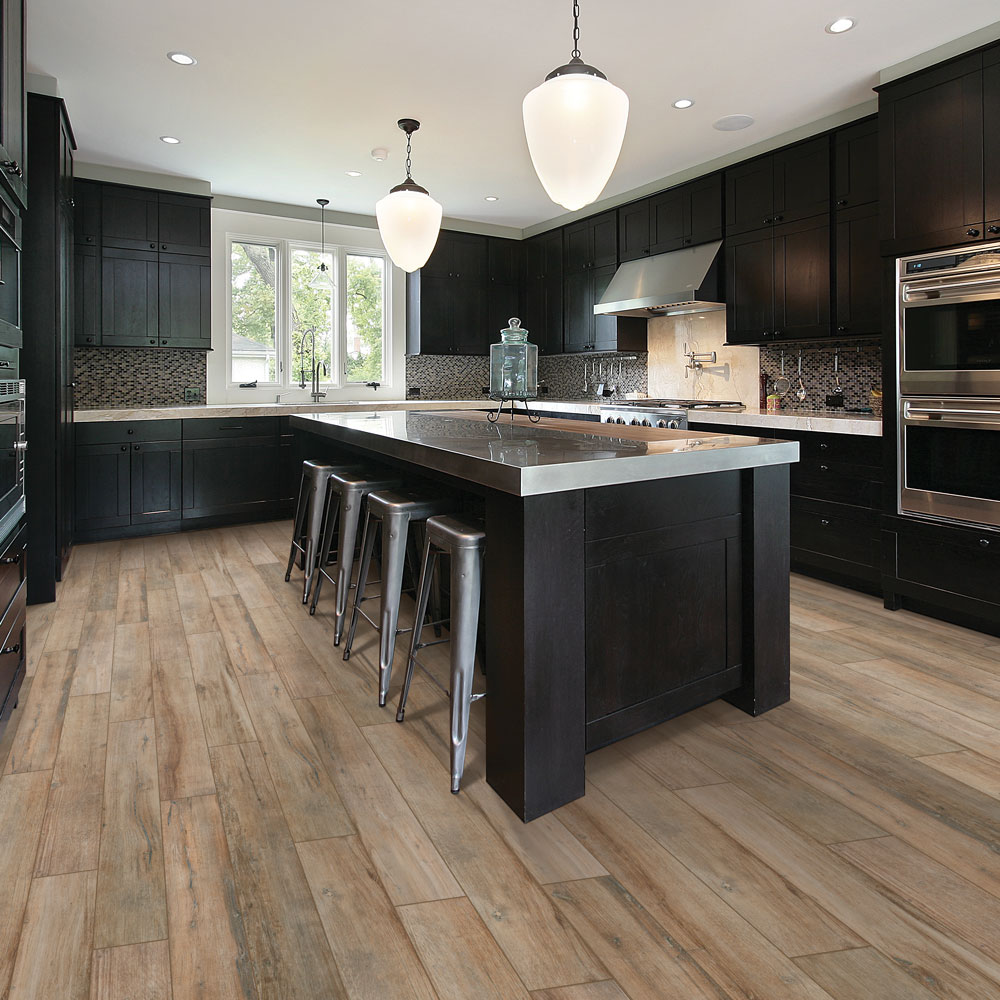
For a more timeless look, go for classic neutrals (soft whites, putty beiges, warm greiges) as a backdrop for cabinets and counters. Smaller kitchens will feel brighter and you won’t have as much visual clutter in an open floor plan. If your space leans cozy or even Scandinavian, wood-look porcelain includes grain and warmth while still handling spills with ease. Wide-plank formats (8x48 and beyond) stretch rooms visually and pair well with shaker cabinets and matte hardware.
For more character, stone-look porcelains are sophisticated without all that complicated sealing. Honed slate looks can ground an all-white kitchen. Patterned porcelain shows off a ton of personality – motifs, geometric tessellations, or even a classic checkerboard in ivory and charcoal. Patterns can also define specific zones in an open layout: place it beneath a breakfast nook while keeping your cooking space neutral.
Large-format tiles change the scale of the whole room. Since there are fewer grout lines, you’ll have a much larger sweep of surface that appears modern and serene. Or, opt for herringbone or chevron plank layouts for more motion and refinement. Borders and inlays help you beautifully frame islands or create a rug-like effect under your dining table without the need for textiles.
Practical Considerations for Porcelain Kitchen Floor Tiles
Slip resistance: Wet tile can be slippery! Consider slip resistant tile or add small area rugs with non-slip pads near sinks and other "splash zones".
Grouting: You can color match for minimalism or contrast for pattern. Smaller joints are more modern, while wider joints add definition and are easier to keep tidy.
Lighting and color: Lighter tiles amplify daylight, while darker tones can hide scuffs and help to visually anchor spaces. Make sure to test samples under your actual lighting!
Edge profile: Rectified tiles allow for tighter joints and cleaner lines. Non-rectified edges feel softer and more traditional.
Subfloor and height: Your tile’s finished height must clear appliance toe-kicks and door swings, and the transitions to adjacent rooms must be smooth.
Acoustics: Harder surfaces reflect sounds. If this is a concern, layer with rugs or soft furnishings to reduce harsh echoes.
The Latest Trends in Porcelain Tiles
Porcelain is directly in the style spotlight these days. Organic textures like subtle stone, concrete, and clay lead the way in pared-back kitchens with their more grounded, tactile quality. Matte finishes are still rising – they’re restrained and practical as they hide footprints and diffuse light.
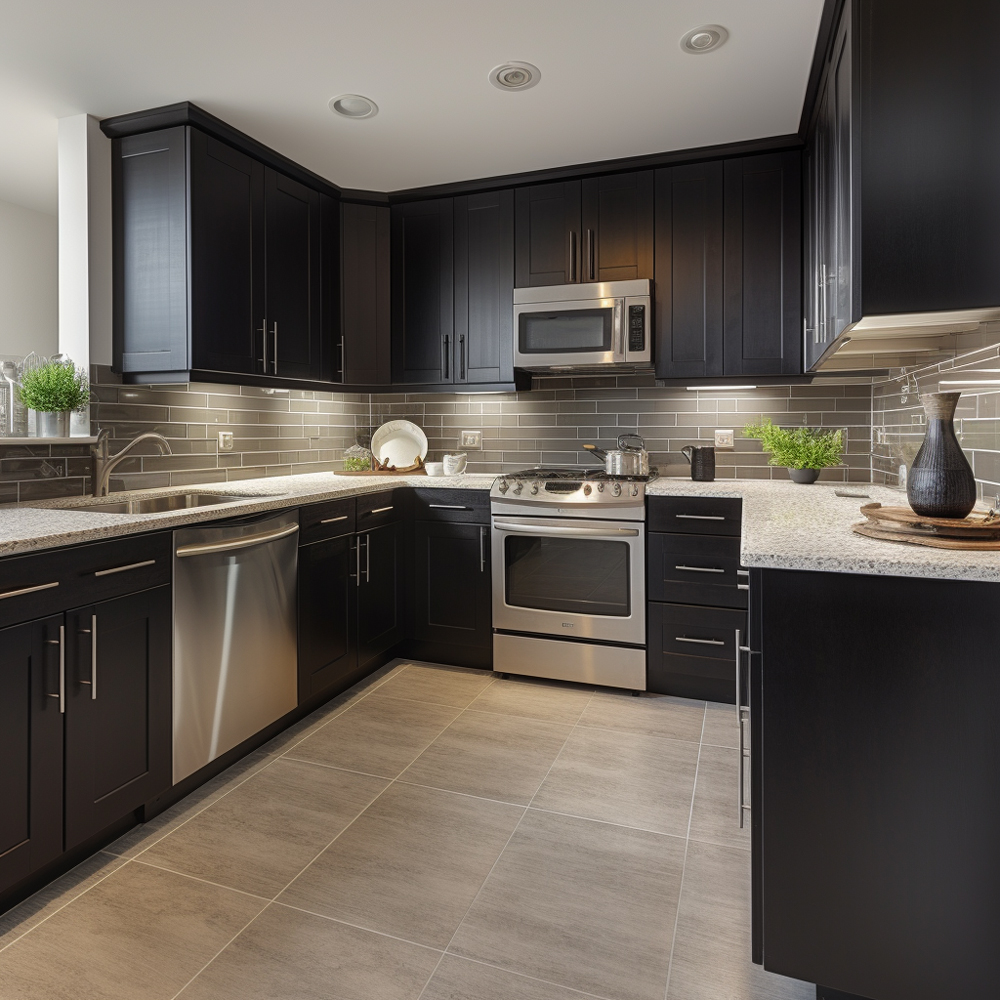
Scale is more important than ever, with oversized formats (24x24, 24x48, and slab-like panels) creating long lines with minimalist grout that almost disappears. For more expressive households, terrazzo-inspired porcelains show off playful speckling that’s both modern and nostalgic at the same time.
Checkerboard tiles have also seen a huge revival. They feel fresh rather than retro in muted and chalky palettes.
Manufacturers have also recognized and emphasized sustainability as a primary focus. Many use recycled materials and energy-efficient production processes. If you care about environmental impact, ask your retailer which brands have taken measurable steps in production and packaging. You’ll be surprised at the selection of eco-conscious porcelain kitchen floor tiles you’ll find!
Porcelain Tile Care and Maintenance Guide
One of the reasons tile is so beloved for kitchens is the minimal maintenance it requires. A simple daily or weekly sweep of your tile floors helps remove crumbs and grit that can dull your finish, and anything more stubborn can usually be mopped or cleaned with a sponge and mild soap and water (always check your manufacturer's guidelines before using any product on your tile floors).
Find Your Porcelain Kitchen Floor Tiles
Porcelain tile is simply a beautiful choice for your kitchen, but it’s one that will stand up to your daily life. Its formats and finishes suit any design language, and the upkeep is so simple that it fades into the background.
If you’ve got your ideal porcelain kitchen floor tiles in mind or need some extra guidance, the team at Empire® is here to help. Reach out to a member of our team or schedule a FREE in-home flooring estimate today!